Red Rocks, Big Sky

Declan Kennedy
| 30-04-2026

Stand at the right spot in this red rock park and you get three landscapes for the price of one. In the foreground, cottonwood trees have gone full yellow-gold. In the middle, enormous red sandstone fins jut out of the earth at sharp angles, some of them taller than a ten-story building.
And behind all of that, Pikes Peak sits under a fresh dusting of snow, its summit pushing past 14,000 feet into a sky so blue it almost hurts to look at. It's the kind of scene that makes you check if you're still in the real world.
What Is This Place?
Sitting on the western edge of Colorado Springs, this iconic red rock park covers about 1,300 acres of dramatic sandstone formations, open meadows, and pine-juniper woodland. The rocks themselves are Permian-age sandstone — around 300 million years old — that were once lying flat on the ground and got tilted nearly vertical by the same tectonic forces that built the Rocky Mountains. The result is these dramatic blade-like formations that catch the light differently at every hour of the day. Morning turns them deep burgundy. Midday brings out the orange. Sunset goes full red.
Malaysia's duty-free island has luxury resorts, jungle waterfalls, and cable cars — and it costs half of what Bali does.
Ireland's most photographed castle has W.B. Yeats' fingerprints all over it — and you can visit for free.
One Road, One Season, Zero Regrets — Why a New England Fall Drive Belongs on Every Bucket List
Ancient villas, shifting blue waters, and $5 ferry rides: Your practical guide to Lake Como
UNESCO-listed, outrageously photogenic, and more accessible than you think — here's your complete Dolomites playbook.
People keep calling this tiny Swiss alpine lake "fake" — until they actually jump in and feel the ice-cold reality!
Pikes Peak
Pikes Peak — the Mountain Behind Everything
That snow-capped giant in the background is Pikes Peak, one of Colorado's famous "fourteeners" — mountains exceeding 14,000 feet. At 14,115 feet, it dominates the skyline from almost anywhere in Colorado Springs. You can hike to the summit via the Barr Trail, a 13-mile climb that gains nearly 7,400 feet in elevation — a serious full-day commitment. Prefer something less strenuous? The Pikes Peak Cog Railway takes you all the way to the top in about an hour each way, with views that get more jaw-dropping the higher you climb.
Getting There
Colorado Springs is about 70 miles south of Denver. The easiest way is to fly into Denver International Airport and rent a car — the drive down I-25 takes roughly 1 hour 15 minutes. Alternatively, Bustang bus service runs between Denver and Colorado Springs for around $11 each way. Once in the city, the red rock park is about a 10-minute drive from downtown, with free parking lots available at the visitor center.
Practical Info and Costs
The park has no entrance fee — completely free, open every day from 5am to 11pm. The visitor center is open daily and also free. For Pikes Peak specifically:
• Pikes Peak Cog Railway: around $45–$55 per person round trip
• Pikes Peak Highway (drive yourself): $20 per person, $100 max per vehicle
• Barr Trail hike: free
For accommodation in Colorado Springs:
• Budget motel near the park: $75–$110 per night
• Mid-range hotel downtown: $130–$180 per night
• Vacation rental with mountain views: $150–$250 per night
When to Visit and What to Expect
Autumn is genuinely special here. The cottonwoods turn gold, the crowds thin out compared to summer, and Pikes Peak gets its first snow while the valley below is still warm enough for a comfortable hike. Spring brings wildflowers scattered between the red rocks. Even winter has its moments — snow on the sandstone formations against a clear blue sky is a completely different kind of beautiful.
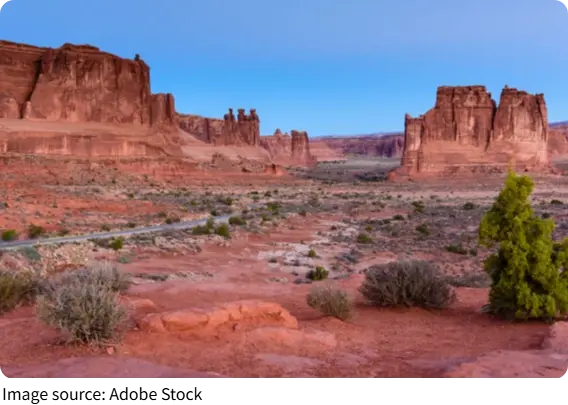
The park has over 15 miles of trails ranging from flat paved paths to more technical scrambles. The central garden loop is the classic intro route — about 1.5 miles, paved, accessible, and hits all the iconic rock formations. If you only have two hours, that's the one to do.
Colorado Springs doesn't always make the top of people's American travel lists, but it probably should. Between the red rocks, the mountain backdrop, and a summit you can actually reach without mountaineering gear, this corner of Colorado delivers more visual drama per square mile than almost anywhere else in the country.